Showing posts with label history. Show all posts

04 February 2020

ARIMA BORN: Land, Labour, Power, and Colonial Mythology in Trinidad


Focusing on the history of the Arima Mission in the Island of Trinidad, ostensibly a mission for Indigenous people, the documentary below features what was learned from the baptismal registers of the Mission of Santa Rosa de Arima—in conjunction with historical texts, government documents, and official memoranda and reports of the time. What we encounter are four main “myths,” or working fictions: 1) the myth that the Mission was for Indians alone; 2) the myth of “Christian protection”; 3) the myth of assimilation; and, 4) the myth of extinction. The film, and the book on which it is based, argues that a proper understanding of the history of the rise and demise of the Mission has to be in relation to the slave plantation economy. Broadly speaking, we are dealing with a story at the intersection of land, labour, and power under conditions of oligarchic domination and the creation of poverty out of plenty.

Research that went into the book, Arima Born, on which the documentary below was based, became part of my “knowledge repatriation” strategy. This was accompanied by a series of events that, for some, would be examples of “public anthropology”.

First, copies of the book were deposited for free in various key access points: in Canada, copies were deposited with Libraries & Archives Canada, along with an e-book; in Trinidad, copies were deposited in the Heritage Collection of the National Library (NALIS), the Arima Public Library, and the West Indian Collection of the Alma Jordan Library of the University of the West Indies.

Second, free copies of the book were delivered to the Santa Rosa First People’s Community, in addition to providing copies to select members of the Arima community more broadly, including the Santa Rosa Roman Catholic Church.

Third, an offer was made to the leadership of the Santa Rosa First People’s Community to republish and print the book locally in Trinidad, under an imprint of its choice, with the majority of revenues going to the SRFPC.

Fourth, public presentations based on the book were made at the community centre of the Santa Rosa First People’s Community on December 10, 2019, and at the Arima Public Library on January 8, 2020. The slides below accompanied those public presentations, and are being made available for download:


Fifth, awareness of the issues presented in the book, and in the public presentations, was heightened by the publication of three separate articles by different authors in the national media in Trinidad & Tobago:

  1. Arima mission a ‘slave colony’,” in Newsday (Oct. 22, 2019), also available here.
  2. First Peoples want HDC house for Carib Queen,” in Newsday (Dec. 12, 2019), also available here.
  3. Counting ‘Indios’,” review by Bridget Brereton in the Daily Express (Jan. 29, 2020), full text available here.

Sixth, the documentary below is the latest form of public presentation of the knowledge gained from this research. The film is available both on YouTube and Vimeo.


01 February 2020

“Counting ‘Indios’”: Review by Bridget Brereton


Originally published in the Daily Express
by Dr. Bridget Brereton
January 29, 2020

Dr. Bridget Brereton, Trinidad Historian
The history of Trinidad’s First Peoples before the coming of the Europeans has been researched by archaeologists like John Bullbrook, Irving Rouse and (more recently) Arie Boomert. After European contact (from 1498) written records are available to reconstruct what happened to these people, and the Arima based Santa Rosa First Peoples Community (SRFPC) has worked hard over several decades to remind us that their descendants today form an important part of the national population.

Maximilian Forte, a Canadian anthropologist at Concordia University in Montreal, has researched the history of Trinidad’s First Peoples, especially those associated with the Arima Mission, for many years. He published an important book in 2005, with the (typically academic!) title Ruins of Absence, Presence of Caribs: (Post)Colonial Representations of Aboriginality in Trinidad and Tobago, and is a long-standing collaborator with the SRFPC.

Last month, I was lucky to attend the launch of Forte’s new book, Arima Born, held at the SRFPC Centre in Arima. Introducing him, Chief Ricardo Bharath Hernandez described him as a friend and “documentalist” of the SRFPC for over 20 years, a counsellor and teacher “with the characteristics of the eagle”.

In a fascinating presentation, Forte explained that his new book was based on the baptism registers of the Arima (Roman Catholic) Mission Church, covering the period 1820 to 1916, plus various other documents of the same period. In Trinidad, as in many other places, surviving church registers (baptisms, marriages, burials) are a key source for historians, especially when we remember that government or “civil” registration of births, marriages and deaths typically began only in the 1800s (1847 in Trinidad).

Forte said that his research for Arima Born has led him to expose what he called four “myths” about the Arima Mission, which was the main Catholic-run centre for surviving First Peoples (whom Spanish priests called “Indios” or Indians) in Trinidad from 1786. (Overall, 630 “Indios” appear in the Mission’s baptism registers.)

First, Arima’s population in the early 1800s was predominantly African not “Indian”: most baptisms recorded in the Mission registers for the 1820s were of enslaved (African) children. Arima was a small settlement surrounded by plantations, many owned by French Creole families, and worked by enslaved Africans, who outnumbered the First Peoples (“Indios”) in the “Indian Mission”.

Second, what Forte called the “myth of Christian protection”: in fact, the Church could and did sell or grant the lands of the Mission (in theory vested in the resident “Indios”) to others for plantation development, such as the Farfan family. And the Mission ran its own rum shop and allowed the “Indios” to run up debts to the shop, a way of controlling their labour and maybe forcing them to sell their lands.

Third, the myth of “assimilation”, the idea that the First Peoples of the Mission adopted Christianity and its associated lifestyles with little resistance. In fact, many fled from the Mission; disobeyed church teachings; buried their dead in the hills not in the Mission cemetery; and rejected Christian marriage (53 per cent of the baptisms of “Indio” children were “illegitimate” between 1820 and 1852).

Finally, the myth of “extinction”, the “vanishing Indian”: the “Indios” didn’t vanish, of course, but the Mission was disbanded when slavery ended in the 1830s. Now, their labour was no longer needed and their lands in Arima were wanted for plantation development. And so they were no longer counted; in the baptism registers, they were no longer identified as “Indios” from the 1840s, but given a new ethnic identity, such as “mestizo”.

Sadly, Arima Born was not available for purchase at the launch, but Forte’s new book—from his presentation clearly a major contribution—can be ordered online from Alert Press.

13 October 2019

Pearls, Grenada: Histories of Resistance by an Old Runway


A view out toward the sea, from the beach at the end of the runway in Pearls, Grenada
Pearls, in the Parish of St. Andrew’s, Grenada, just up the road from the main town of Grenville, is a unique place that sits at the intersection of two of the main themes of my research career: the cultures and histories of Indigenous Peoples of the Caribbean, and the political economy of US imperialist interventions. Both of these strands come together, in one specific spot: the old runway—still very much intact—at what was once Pearls Airport. The airport is the subject of the short photo essay contained in the article titled, "Pearls before Swine," from which the following sections were extracted.

Aerial view of the runway at the old airport in Pearls.
....The old runway at Pearls is a place that is barely frequented by tourists; there were only two young American ladies doing a self-guided tour when we were there, but then again we were there during low season. On local tourist maps the image of the runway is accompanied by a label boasting of “Amerindian Sites,” except there is no museum in the vicinity, nor any tours or tour guides to take one to see these “sites”. The two American women we met were totally mystified by this apparent absence, and they had asked everyone they encountered, as we had, about where they were to go to see the Amerindian artifacts. None of the locals could (or would) give an answer.

What we did not realize, at least not at first, is that we were standing right on top of the artifacts: they were spread all around the borders of the runway, and in the heaps of soil piled up at the end of the runway by the beach, where British bulldozers pushed the soil when clearing land for the tarmac.

That then is the other, older history of Pearls: it was once a major Amerindian port, possibly the largest of its kind, connecting Indigenous communities spread across the Lesser Antilles. Some historians have described it as “the most important archaeological site in the Caribbean”. Pearls had been occupied for at least seven centuries, from 300 BC to 400 AD. Trinidad, just 80 miles to the south, and much larger, has nothing like Pearls in terms of the broad expanse of Amerindian artifacts covering such a large area, with always more artifacts being uncovered at Pearls. I am not aware of the remnants of any “Amerindian port” in all of Trinidad, or Tobago for that matter.

The runway ends just feet from a long and wild beach, not the kind which would normally attract swimmers. The waters are pretty rough, with waves coming in fast and furious, from all angles. The humid air is thick with sea salt. The beach is “littered” with gorgeous pieces of sun-bleached driftwood. The beach shows a few signs of being used by locals for liming purposes: a small amount of discarded soft drink bottles, for example....

....what is also buried in Pearls is the Amerindian side of what could have been. Amerindian Grenada was a proud place, which for over 150 years—think of that astounding number—successfully drove off colonizing efforts by the British and French, and preserved Grenada as a Caribbean bastion of Indigenous freedom. It is a history that is both awesome and inspiring. In those encounters with the military superpowers of the time, Grenada was utterly victorious. This is one of the reasons I call the Caribs the original anti-imperialists of the modern world-system.

Amerindian Grenada was a green place of beauty, of people who knew how to live the good life and enjoy the free bounties of nature. Grenada is of course still ultra green, and Grenadians show all signs of knowing how to enjoy the good life regardless of any strife or troubles. Yet Amerindian Grenada was something different: their society was one without schools, prisons, offices, army bases, plantations, slavery, or money. Theirs was the peace to which we all claim to strive, but pretend to be unable to achieve, buried under mountains of corruption, addictions to all manner of artifice, and constrained by the daily authoritarianism that dominates our lives.

In terms of preserving or at least acknowledging the Amerindian past, it is true that the Grenada National Museum (the subject of essays to come), has made some efforts to advance local knowledge of Pearls’ Indigenous heritage, with special archaeological field trips for local schoolchildren, assisted by the incredible Michael John. Michael John, himself from Pearls, is a self-made archaeologist, with an apparently natural talent for spotting Amerindian artifacts. He is a man who is very likely of Carib descent and who also makes a living carving stone objects that look much like those one normally finds buried in the ground, those carved by his likely ancestors.

On the whole, however, what is being done to preserve and protect the memory of the Amerindians is far too little. Amerindian history is sometimes looted by tourists, some of whom possibly do not know that it is against the law to remove artifacts—but then again, nobody is enforcing the law. Suitcases and other travel items are not checked by the authorities when one flies out of Grenada, as they ought to be in all cases. Locals who claim to know nothing about “Amerindian sites” in the vicinity of the Pearls runway may be performing a very valuable service.


30 September 2019

The Real History of the Mission of Santa Rosa de Arima: From ARIMA BORN


The real history of the Arima Mission in Trinidad is one of exploitation, and even abuse. The Arima Mission is revealed to have been primarily a slave colony, dominated by the presence of Black slaves. The mission itself was under the authority of Don Manuel Sorzano, a prominent official in the outgoing Spanish regime, a major estate owner in Arima, and an owner of slaves. Rather than just an Amerindian history, the baptismal registers reveal a masked and obscured African history of Arima. The baptismal registers, coupled with other documentary sources, also reveal a history of Amerindian resistance to assimilation promoted by the “civilizing mission” of Christianization. Assimilation was largely a failure—a fact that was embarrassing to colonial élites—and rather than confront their failures they airbrushed Amerindians out of history altogether. We also witness how colonial authorities, priests included, went about the business of deliberately under-counting the Amerindian population, when it became convenient. The fabricated “vanishing” of Amerindians also reveals a complex political economy of land, labour, and power.

Amerindians were valued while their labour had value, and their labour had value only for as long as they cultivated cassava to feed slaves, cleared lands for cultivation, built roads to speed the products of estates to market, and staffed the armed militia used to put down slave revolts. When the cocoa-producing lands occupied by the Mission’s Amerindians soared in value, and when slaves were emancipated, plus an influx of new labourers from abroad came in, the value of Amerindian labour plunged. It is no accident that the Arima Mission was dissolved a few short years after slaves were fully emancipated at the end of apprenticeship in 1838. Amerindian labour, and Amerindians as such, became disposable.

By a change in labelling practices, they were made to disappear from the baptismal registers. Rather than help perpetuate a community of Amerindians, the mission promoted its breakdown. This book tells that story for the first time.


26 September 2019

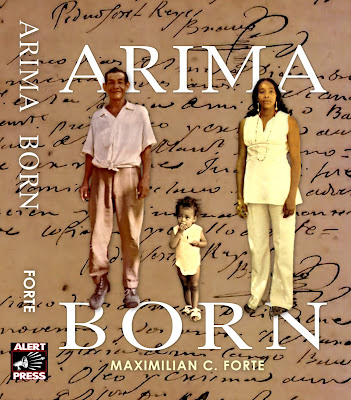
New Book: ARIMA BORN

Arima Born: Revealing the History of Arima and its Mission through the Catholic Church’s Baptismal Registers, 1820–1916


ARIMA BORNThe Catholic Mission of Santa Rosa is something that helped to make Arima a distinctive town in Trinidad, accounting for nearly half of the Amerindian population of the colony in the 1800s. The baptismal registers of the Catholic Church in Arima, including those pertaining to its years as a Mission, offer us unique insights into the social history of Arima, its demographic and cultural transformations, while opening another window onto the profound political-economic and legal changes that occurred in the colony throughout the 19th-century. However, when the data from those baptismal registers are read in conjunction with government documents and texts from the time, we are faced with what might seem like a series of deep mysteries.

Was Arima’s mission an Indian Mission after all? Was the mission established “for the good” of the Amerindians? How many Indigenous people lived in the Arima Mission, and in Trinidad as a whole? Who counted them? How were they counted, and why? Were the Amerindians segregated from other races? Why did Arima come to be seen as a centre of Indigenous culture in Trinidad? Exactly how did the Amerindians “vanish” from the Mission? Did the mission help to perpetuate Amerindian social and cultural forms in Trinidad, or did it promote their dissolution? Did the Amerindians gladly convert to Catholicism and adhere to an austere lifestyle of obedience and service in the mission? What explains the alleged “decline” in Trinidad’s Indigenous population? Did the Arima Mission have a secret side?

These questions are answered in this book by using two sets of documentary sources: complete data from the Baptismal Registers of the Santa Rosa RC Church about Indigenous and Mestizo persons in the Arima Mission and after (1820 to 1916), reproduced in full in this book; and, newly available historical reports from the 1800s, including the earliest report in print of a visit to the Arima Mission. This book provides new estimates of both the Amerindian population of the Arima Mission and all of Trinidad; revised, updated, and expanded census data for Trinidad’s Amerindian population from the late 1700s to the mid-1800s is also provided, making it the most comprehensive accounting thus far. Ethnohistorians will gain valuable insights and detailed notes about using baptismal registers as sources of data. However, the larger questions about the politics of counting a target population are addressed through a critique of the four dominant myths concerning the Arima Mission.

This book, based entirely on primary sources and reproducing—in full—all of the entries in the baptismal registers from 1820 to 1916 concerning Arima’s Amerindian, Mestizo, and much of its Spanish-language population, addresses the questions above by presenting some striking findings that advance a provocative narrative. Colonial oligarchic domination, the political economy of racism, and the creation of inequality and poverty now stand out.


Choose a format below to order your copy:


HARD COVER COLOUR


HARD COVER, BLACK AND WHITE
Hard cover.
Full colour interior.
Price: $110 (Canadian)
Hard cover.
Greyscale interior.
Price: $45 (Canadian)


PAPERBACK, BLACK AND WHITE


PDF, FULL COLOUR
Paperback.
Greyscale interior.
Price: $26.50 (Canadian)
Ebook (PDF).
Full colour interior.
Price: $16 (Canadian)

Free for everyone:
Download Chapter 4, the complete Baptismal Register data, plus the complete index of names of Indigenous persons (PDF)


07 December 2018

Book Review: The Indigenous Peoples of Trinidad and Tobago from the First Settlers until Today, by Arie Boomert

Arie Boomert
The Indigenous Peoples of Trinidad and Tobago from the First Settlers until Today.
Leiden, Netherlands: Sidestone Press, 2016. xv + 197. (Paper US$ 45.00)


Trinidad and Tobago are the oldest settled islands of the Caribbean archipelago, and as Arie Boomert demonstrates, Trinidad’s geography is not only still marked by hundreds of Amerindian toponyms (unlike any other Caribbean island), but the Indigenous Peoples’ cultural heritage was implanted in the rural and domestic traditions of a peasantry that fused Amerindians, Africans, and Spanish people and lives on to this day. Arie Boomert’s synthesis of archaeological, ethnohistoric, and ethnographic research on the Indigenous Peoples of Trinidad and Tobago is more than just a capstone to his many years of research in this field. It is also more than a book written for the general public (students, history teachers, and adult citizens of the twin-island republic). It is the only existing, up-to-date text on this long-neglected subject that is both comprehensive and yet highly informative on very specific points. Both specialists in the subject, and those with a general interest in the cultural history of the Caribbean, or even the history of the Spanish Caribbean alone, will find great value in this work which should form a part of every serious library collection on the Caribbean.

The structure of the volume is chronologically sound, divided into eight distinct time periods covering roughly ten thousand years, without any one period occupying more space than the others. As an archaeologist himself, Boomert was well equipped to provide the layperson with a good overview of archaeological research conducted in Trinidad, dating back to the 1800s, with roughly 300 sites studied. The strength of the volume lies in its archaeological and ethnohistoric dimensions, with roughly the past century and the present confined to the final chapter. In that sense, the volume tends to reinforce the established tendency to speak of Trinidad indigeneity in the past tense. Yet Boomert’s book also shows how indigeneity in Trinidad is constantly returning from the margins, and is partly due to the island’s close proximity to neighbouring Indigenous populations on the mainland, whose presence figures prominently throughout the book.

Many will appreciate the thick detail in this book, systematically organized as it is. Boomert draws from a wide variety of sources, including his own archaeological work, the offerings of diverse museum collections across Europe, and insights from very rare texts. There is a minimum of speculation in this book, and a maximum emphasis on information. It is also very well illustrated throughout, with attractive photographs, diagrams, and maps. Tobago is not an afterthought either: a significant amount of information about Tobago is presented throughout, with a dense chapter devoted to the Indigenous People of Tobago which in itself is a significant contribution to knowledge. Just to give the reader a sense of the coverage contained in this book, it typically focuses on trade, subsistence, material culture (pottery especially, and weaponry), ritual (burial), warfare, social structure, the division of labour, house construction, political organization, chiefs (many are named) and shamans, and an expertly synthesized and engaging presentation of colonial ethnohistory. The description of the emergence of a rural peasantry, with syncretic religious, ecological and domestic agricultural traditions founded on Indigenous knowledge and practices, is impressive. The book thus also covers issues pertaining to ecology, folklore, health and healing, and food production. Politically, Boomert also devotes considerable attention to slavery (which first emerged in the Caribbean with the Spanish enslavement of Indigenous Peoples); resistance, in the form of revolts; and, collaboration between Indigenous communities and foreign invaders. Boomert’s overview of the Catholic missions among Trinidad’s Amerindians is comprehensive, and not confined to Arima alone, one of the longest standing and more recent missions that is the current home of the revitalized Santa Rosa First Peoples’ Community.

Among the very few shortcomings of the book, there was insufficient effort made to transform archaeologists’ writing into material genuinely intended for a broad public (few would call a bowl a “serving vessel”), and some of the names of vegetables and ground provisions do not appear to be Trinidadian but are imported by the author from elsewhere (such as “coontie [zamia]”). There was actually very little on the figure of the Nepuyo warrior, Hyarima, a treasured part of Arima’s history, with only a few lines offering no new information, yet a subsection of a chapter was seemingly devoted to him. Most importantly, however, is the consistent lack of citations in the text, thus not allowing readers to track down the original sources of information. Instead, Boomert opts for a select bibliography, organized into not very helpful sections. One could also quibble about other specific historical and interpretive points, but none of this is meant to detract from the fact that this book stands as a highly detailed, comprehensive synthesis, that will likely stand unrivalled for many years as a central, go-to resource on the Indigenous Peoples of Trinidad and Tobago.

Maximilian C. Forte
Department of Sociology & Anthropology, Concordia University

31 March 2015

Indigenous Peoples Of The Caribbean: Podcast


Subject:
  Indigenous Peoples of the Caribbean: Memory, Identity, and the Politics of History

In this episode of the History Watch podcast series, Dr. Maximilian Forte of Concordia University is in conversation with Dr. Audra A. Diptee. They discuss memory, identity, and the politics of history as it relates to the indigenous peoples of the Caribbean. For more on Dr. Forte’s work see openanthropology.org/.

Credits:  Voice credits go to Lina Crompton for the introduction.  This episode was produced by Dr. Audra A. Diptee  and Christina Parsons, M.A of the History Watch Project.

26 January 2012

Contesting Trinidad's Past: The Indigenous Peoples

A much appreciated revisiting of the dominant, almost doctrinal assertions made about the history of Trinidad and Tobago--with some attention paid to the ways historiographers diminished and extinguished the Indigenous presence (see from page 178 to 180, "The Politics of Indigeneity", from which the extract below was copied):


The Politics of Indigeneity 


In virtually all accounts of Trinidad & Tobago’s history, it is taken for granted that the nation has no indigenous population, that the aborigines – whether they were “Caribs” or “Arawaks,” both or neither – had disappeared by the nineteenth century and played no role in the islands’ modern development. The literature of the nineteenth and the twentieth century pronounced the absence of the indigenes. Using the powerful tropes of extinction and amalgamation, writers of all persuasions saw the full-blooded Amerindian as entirely lacking in the nation’s pluralist society and aboriginal culture as lost forever. As the anthropologist Maximilian Forte neatly puts it, the view was that “the only real Carib is a pure Carib, and the only pure Carib is a dead Carib” (Forte 2005: 2 , see also -32). The nation was seen as one of those states which were colonial creations, lacking any pre-European past, “modern” from the beginning of their colonial experience, and therefore lacking a primordial past on which to draw for images and symbols of nationalism. In this Trinidad & Tobago was different from Guyana and Suriname on the continental mainland, which both have significant Amerindian populations which have retained much of their cultures and languages (Eriksen 992: 42-44). 

Since the early 1 990s, mainly through the efforts of an organization based in Arima (an old town in northeastern Trinidad where surviving indigenes were concentrated in the late 1700s), the Santa Rosa Carib Community (SRCC), Trinidad & Tobago society has come to recognize the Amerindian/Carib as a valid symbol in nation-building and national identity politics. The result has been, in Forte’s words (2005: 33), “increased recognition of the Carib in narratives of national history.” To acknowledge the Amerindian presence helped to create “a sense of local primordiality and of territorial continuity with antiquity.” The wider society has rediscovered its Carib heritage, and has accepted the “First People” (an internationally used term increasingly deployed by the SRCC) as the nation’s territorial precursors and symbolic ancestors, even if not the biological ancestors of most modern Trinidadians. This is a development which, by restoring the indigenes to the national history, has given antiquity and chronological depth to the concept of the nation, symbolized by the now popular trope of the First People/Trinidadians. The Carib can also be seen as the first to struggle against colonialism. The shadowy figure of “Hyarima,” perhaps a Carib chief who fought the Spaniards in the mid-seventeenth century, can be enshrined as a hero of resistance; a statue of him has been erected in Arima which bears a plaque calling him the first national hero of Trinidad. The tragic episode in 1699, when a group of Amerindians in the Spanish Capuchin Mission at Arena (now San Rafael) murdered the priests and then the governor and his suite, only to be hunted down and killed, or captured, tortured, and executed, can be reinterpreted as an epic of resistance to colonial rule and forced conversion, rather than the horrific murder of noble Catholic martyrs. A recent editorial in one of the nation’s leading newspapers describes the site of this event as “the forest in Arena where 300 years ago, the First People of Trinidad made their last great stand against domination and injustice.” The commemoration of 1992 (the quincentenary of Columbus’s arrival in the Americas) and 1998 (he sighted Trinidad and Tobago in 1498) also helped to fix the Amerindian/Carib as a central figure in the foundation of the national society.

The SRCC has pursued the “invention of tradition” with considerable success since about 1990. “Traditional” festivals and practices connected to them, shamanistic ceremonies developed from several different sources – what Forte calls “global neo-shamanic transfers” – crafts, building techniques, healing practices, and food culture have all been revived, invented, and marketed as authentic Amerindian/Carib folkways. Moreover, the SRCC leaders have successfully forged international linkages with indigenous peoples in the Caribbean and South America (especially Guyana), in Canada and the United States, and globally, to strengthen the legitimacy of their identity as recognized aboriginal people. The use of “First Peoples/Nations” is a hallmark of this globalizing process, similar in many respects to the globalization of various “Diasporas” in recent years. The SRCC has also shrewdly developed strong links with the political elite, enjoying an especially close affiliation with the PNM, which is in power at the time of writing, but also with the two other parties which governed between 1986- 1999 and 1 995-2000 . Partly for this reason, partly because the individuals who self-identify as Amerindian/Carib are very few numerically, partly precisely because of their status as indigenes, the people who were always here, the SRCC’s activities and claims have not been seen as a threat either to the nationalist narrative, or to the ethnic projects whether Afrocentric or Indocentric. Certainly, however, they have succeeded in rewriting the Amerindian peoples into the national narrative of Trinidad (Tobago is only marginally part of their discourse). This success is reflected in a local newspaper editorial which recently declared “it’s never too late to pay tribute to the First Peoples of the nation. They were the ones who had to bear the brunt of the initial bruising encounter with an invading culture and the peoples decimated in the largest number and perhaps most brutal manner by the ‘discoverers’” (Forte 2005: 8 -97, 99-2 3, 224).

25 July 2011

The Santa Rosa Carib Community of Arima, Trinidad and Tobago: A Video Introduction

Carib Community of Arima, Trinidad and Tobago from Maximilian Forte on Vimeo.

This video introduction is the start of a long overdue series of video documentaries to come, this one focusing on photography and providing a condensed overview of the key themes in the history, politics, and culture of the Caribs of Arima, Trinidad. It also presents much of the material of what used to be available on the website of the Santa Rosa Carib Community, which has since expired and which has not yet been replaced by Indigenous members of the community (I am the former webmaster)--although it remains archived here. (In addition, see this tremendous effort to put material about the Carib Community online, by primary school students in Trinidad, hosted by the Ministry of Education.) With time, I will be posting the best of the materials from the former Carib Community website, so that they are still "active" online.

The video above is based on both ethnographic and historical research. The contents of the video are organized according to the following sections:

1. The Mission
The loss of lands under colonial rule; racism; displacement.

2. The So-called "Extinction"
How the Caribs were abolished by the stroke of a pen; historiography; stereotypes; censuses; "the only real Carib is a pure a Carib, and the only pure Carib is a dead Carib".

3. The Traditions
Loss of land, but perseverance of the essence of indigenous affectivity: belonging, Home. The mutation and multiplication of traditions: glimpsing what the Caribs mean by retained, maintained, and reclaimed traditions.

3-A. The Santa Rosa Festival
Processions. Gathering together.

3-B. Work duties for the Santa Rosa Festival
Carib labour; maintenance of a Carib hold on Trinidad's oldest public festival.

3-C. The Smoke Ceremony
Indigenous resurgence, reclamation, shamanism. Indigenous language reacquisition. Prayers.

4. The Resurgence

A focus on key actors in the Carib Community, and the role played by Indigenous Peoples outside of Trinidad who visit the Arima Caribs.

4-A. Chief Ricardo Bharath Hernandez
How he started the resurgence. Formation of the Santa Rosa Carib Community as a new organization. Being landless.

4-B. Shaman Cristo Adonis
The shaman is the one who sings--a short overview of Cristo Adonis' work in the community.

4-C. Carib Queen Justa Werges
Extensive quotations on the role and power of the Queen, the vision of Just Werges.
--Brief notes on other Carib Queens (in this video, a total of four appear: Maria Werges, Edith Martinez, Justa Werges, and Valentina Medina)

4-D. International Indigenous Connections
Selective, based on the photographs available: Assembly of First Nations of Canada, Assembly of Manitoba Chiefs, Federation of Saskatchewan Indian Nations, Tainos, Australian Aboriginals, Dominica's Gli-Gli Carib Canoe, Guyanese weavers, Surinamese singers.

5. The Question of Recognition
The paradox of recognition as another act of dismissal. How the Caribs have been monumentalized, enshrined, museumized, and continue to be stereotyped and appropriated. The national mainstream media. State support and government recognition.
Yet, the state will only recognize one single organization, and only then after having pushed it to formally incorporate itself as a limited liability company, which is the legal status of the Santa Rosa Carib Community.

Funds provided to the Community are for the purposes of mounting shows and displays, not for the Community's own sustenance, to achieve self-reliance, for its own long-term benefit.

Recognizing only one organization, in one single place, as Carib means that all of the descendants of Trinidad's Indigenous Peoples, spread throughout the country, go unrecognized.

The Caribs have been boxed up. The state mounts an implausible explanation to the United Nations: that all Caribs died off, except for in Arima, only one of over a dozen mission towns to have existed.

If before the only real Carib was a pure Carib, and the only pure Carib was a dead Carib...today that has become:

"The only recognized Carib is an Arima Carib."

Otherwise, the state dares not to even speak the name Carib, Warao, Indigenous, Amerindian, or First Peoples on the national Census.

And so the struggle continues...
Closing with a collage of members of the Carib Community throughout history.

07 July 2011

Kalinago (Carib) Territory, Dominica: A Video Introduction

This is a fairly elementary but well synthesized historical overview of the indigenous people of Dominica, narrated by Dominican historian Lennox Honychurch. It was produced by the Government of Dominica, and specifically by the Ministry of Tourism, so don't expect any radical indigenist critique of the post-colonial nation-state here. Nonetheless, it is an interesting visual record with good introductory historical and ethnographic detail. And, it is shared freely, and in its entirety, unlike some of the videos we recently posted.


30 November 2007

Taíno Curricula: A World of Opportunity

To satisfy NYS core curriculum standards for Social Studies in The Western Hemisphere: Latin America, the 5th grade classes I am working with discuss Taíno culture as a way to chronologically kick off their year-long investigation of Hispaniola. But the cultures, geographies, and histories of the Taino people are so strong and varied that it's easy to imagine a Taíno investigation as part of a Global Communities curriculum, or a point of comparison for studying other indigenous "American" cultures in an early American history unit.

The more I talk with Taíno cultural experts around the city, the more I hear echoes of the same sentiment: it's awfully exciting to find out that Taíno culture is increasingly becoming a part of the curriculum in New York City public schools! The people I've worked with so far - from museum educators to performing artists - have all been warm and genuinely enthusiastic about introducing students to the richness of pre-Columbian Taíno culture. The Taíno Indians, before Columbus, inhabited much of the Caribbean including the Bahamas, present-day Puerto Rico, and Hispaniola. I get the sense that the community in New York is close-knit - people sharing similar interests and a passion for shining light on notoriously underrepresented indigenous peoples. Connecting with that community is an educator's dream. One person refers you to another, and soon enough a bevy of cultural resources seem to appear. The Voice of the Taino People blog is a vibrant living document that compiles news and cultural events relating to Taíno peoples in the Caribbean and the Diaspora.

And the Taíno legacy is so alive in New York City today! To so many students of Caribbean descent (and there are many in New York's schools), a Taíno artifact is not just a dusty museum relic but something with familial, personal significance. Maybe a student recognizes that wooden device from his grandmother's kitchen. Another realizes that the music she grew up listening to in 21st century Brooklyn actually pre-dates Columbus, and the instruments are, miraculously, the same. On a recent trip to the National Museum of the American Indian (also raved about by my co-blogger Margot), I was tickled to see so many students recognizing traditional Taíno artifacts as household goods. This surprising bridge, between contemporary life in Brooklyn and indigenous daily life on Hispaniola, would not have come nearly as alive without our full investigation of Taíno culture.

Posted by Evan O'Connell on November 28, 2007 at 08:24 PM
TrackBack URL for this entry:
http://www.typepad.com/t/trackback/2309096/23756390
____________

09 July 2007

New Book: Taino Indian Myth and Practice

Our thanks to Bobby Gonzalez for forwarding this news:
Taíno Indian Myth and Practice: The Arrival of the Stranger King
by William F. Keegan
Details: 256 pages 6x9 Cloth: $39.95
ISBN 13: 978-0-8130-3038-8
ISBN 10: 0-8130-3038-2
Pubdate: 4/22/2007
"A path-breaking work, rich and mature, complex but readily accessible. It unites the many facets of . . . 25 years of innovative research and leads us out of the once-irresolvable dilemmas of contemporary archaeology."--Geoffrey W. Conrad, William Hammond Mathers Museum, Indiana University

"Charts a new course toward a broader understanding of Taíno society, myth, and archaeology at the dawn of the Spanish colonial period. His approach livens the archaeological record and illuminates our reading of the documentary record."--Dave D. Davis, Tulane University

Applying the legend of the "stranger king" to Caonabo, the mythologized Taino chief of the Hispaniola settlement Columbus invaded in 1492, Keegan examines how myths come to resonate as history--created by the chaotic interactions of the individuals who lived the events of the past as well as those who write and read about them. The "stranger king" story told in many cultures is that of a foreigner who comes from across the water, marries the king's daughter, and deposes the king. In this story, Caonabo, the most important Taíno chief at the time of European conquest, claimed to be imbued with Taino divinity, while Columbus, determined to establish a settlement called La Navidad, described himself as the "Christbearer."

Keegan's ambitious historical analysis--knitting evidence from Spanish colonial documents together with data gathered from the archaeological record--provides a new perspective on the encounters between the two men as they vied for control of the settlement, a survey of the early interactions of the Tainos and Spanish people, and a complex view of the interpretive role played by historians and archaeologists. Presenting a new theoretical framework based on chaos and complexity theories, this book argues for a more comprehensive philosophy of archaeology in which oral myths, primary source texts, and archaeological studies can work together to reconstruct a particularly rich view of the past.

William F. Keegan is curator of Caribbean archaeology at the Florida Museum of Natural History and professor of anthropology and Latin American studies at the University of Florida.

Other WILLIAM KEEGAN Books
The People Who Discovered Columbus: The Prehistory of the Bahamas

14 April 2007

Los mitos taínos

Los mitos taínos is a website that CAC Editor Jorge Estevez recommends to our readers. It is in Spanish. The various sections of the website deal with Taíno themes in Spanish Caribbean literature; Taíno mythical genealogy; photographs of the Tibes museum; monuments that have been built in commemoration of Taíno historical figures; select myths; and, a very useful page of links to complementary resources on Taíno history and mythology, well worth examining.

The first page of the site explains its purpose in the following words:

"Esta página le ofrece al lector un repositorio de información sobre el tema mitológico-literario taíno. Ha sido construída como un recurso educativo para aquellos que desean mantener viva la herencia taína."

The author of the website is Sonia M. Rosa. The site emerged as extracts from her Masters thesis in 2003, and she is the copyright holder for all images on the site.

12 April 2007

New Book from the Kalinago of Dominica


YET WE SURVIVE
The Kalinago People of Dominica: Our Lives in Words and Pictures


is a new book created by the Kalinago people of Dominica, recently released by Papillote Press in London.

The book is edited by Mary Walters, with a foreword by Lennox Honychurch.

This book tells the story of a remarkable people. Nowadays the Kalinago (Carib) people live in a corner of Dominica as farmers and fishermen, taxi drivers and teachers; they make baskets and build canoes and preserve what is left of their rich cultural legacy.

With their own words and pictures, this book offers an extraordinary insight into the Kalinago people as they see themselves today: at work and play, shopping, schools, religion, the differences between women's and men's lives. It illustrates who they are, how they live, how they see their future.

Yet We Survive is fully illustrated and supports the teaching of social subjects, history, geography, language, expressive arts, ICT, global citizenship and enterprise for pupils at Key Stage 2 in England and Wales, and Primary and S1 in Scotland.

Editor and teacher Mary Walters says: “There is a wealth of material here for students to explore a unique Caribbean culture while comparing and contrasting it with their own lives.”

Professor Peter Hulme, University of Essex, says: “Just 515 years after Columbus arrived in the Caribbean, these indigenous people finally get to speak here through their own words and photographs, showing what it means to maintain a traditional culture while living in the modern world.”

Professor Hulme adds: “Most history books say that the indigenous population of the Caribbean has been extinct since the sixteenth century. As its title suggests, Yet We Survive shows that the Kalinago (Carib) population of the island of Dominica is still alive and kicking in the 21st century. In turn dramatic and commonplace, heart-rending and uplifting, Yet We Survive offers a unique window into a unique culture.”

Irvince Auguiste, former Carib chief writes: “Yet We Survive has been the most interesting literature on the Kalinago people of Dominica because it provided a number of our young people with the opportunity to collect the information and to work on it while they acquired new skills in photography and techniques in conducting interviews. Since the work was done, the infrastructure has improved and new projects are being explored for economic development, particularly in tourism. Congratulations to Mary Walters.”
Excellent teachers’ notes available from
www.papillotepress.co.uk or email pollyp@globalnet.co.uk

Publication date: April 16 2007 ISBN: 078-0-9532224-2-1 Hardback £9.99
Title : Yet We Survive - The Kalinago People of Dominica: Our Lives in Words and Pictures
Editor : WALTERS, Mary
Hardback : 40 pages
Publication Date : April 2007
ISBN10 : 095322242X
ISBN13 : 0780953222421

For further information: Polly Pattullo on 0207 720 5983 or email: pollyp@globalnet.co.uk
23 Rozel Road, London, SW4 0EY, UK.
www.papillotepress.co.uk

31 March 2007

Untold Origins -- Caribbean Indigenous Museum Exhibition

"Untold Origins," an exhibition dedicated to indigenous Caribbean heritage and identity, took place under the auspices of the Cuming Museum in Southwark, London, from October 19, 2004 to February 26, 2005.

The Cuming Museum sought to challenge several myths of Caribbean history, such as those of the cannibalistic Caribs eating their way through docile Arawak communities, or those pertaining to the often repeated notion that indigenous peoples in the Caribbean are extinct. In this vein, the organizers of the exhibition explain, "the Cuming Museum wanted to explore their survival in more depth and to discover whether there are any echoes of indigenous culture surviving in Southwark's Caribbean culture today." The Untold Origins exhibition was originally presented for Black History Month in 2004. It sought to explore "the untold history of the indigenous people of the Caribbean and their contribution to the Caribbean culture of today." An attempt was made to join reflection of Caribbean indigenous survival with contemporary ways of making sense of one's identity, and how movement and cross-cultural contact could affect the process of making one's identity.

The Cuming Museum has since decided to provide online the various photographs and information boards that were used for the exhibition, for the sake of those who could not have been present.

These materials include the following:


Please click here to go to the original site for the exhibition.